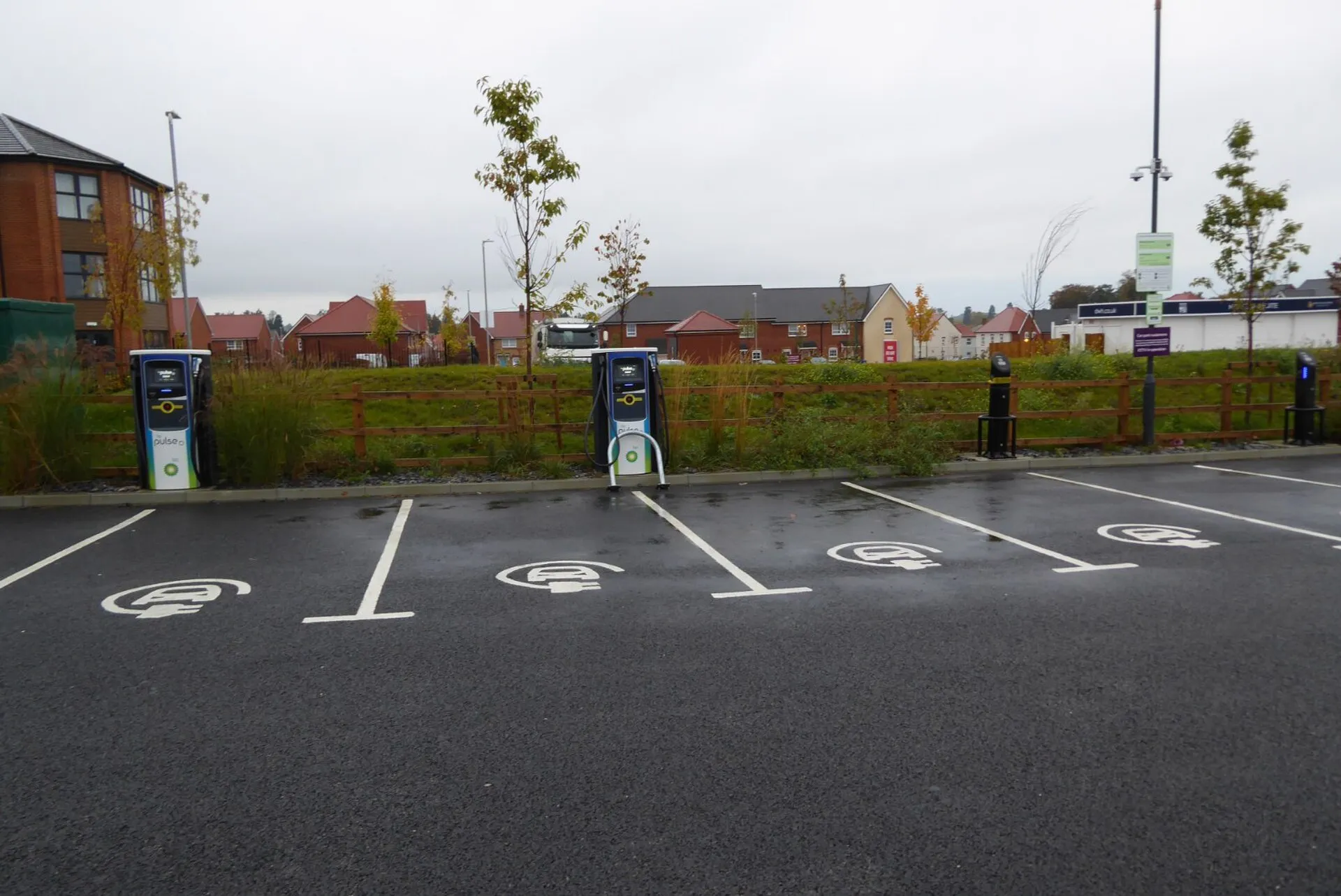
If you're new to EVs — or just confused by the alphabet soup of connector names — you're not alone. Here's a plain-English explanation of what CCS, CHAdeMO, and Type 2 actually mean.
The Three Main Connectors in the UK
Type 2 (AC charging)
The standard connector for AC (alternating current) charging in Europe. This is what you'll use at most public AC charge points and at hotels. It looks like a rounded seven-pin plug.
Type 2 is used for slower charging — typically 3kW to 22kW — and is ideal for home charging, overnight hotel stays, and workplace charging.
Who uses it: virtually every EV and PHEV sold in Europe since 2014. Tesla, VW, BMW, Renault, Nissan (newer), Hyundai, Kia, Vauxhall, Peugeot — all use Type 2 for AC charging.
CCS (Combined Charging System — DC rapid charging)
CCS is the European standard for DC rapid charging. It looks like a Type 2 connector with two additional large pins at the bottom. That "combo" design is where the "Combined" name comes from.
CCS supports much higher power levels — typically 50kW to 350kW — and is used at rapid charging stations for quick top-ups on longer journeys.
Who uses it: almost every modern EV sold in Europe — Tesla (since 2021 in the UK), VW ID series, Hyundai IONIQ 5, Kia EV6, BMW iX, Ford Mach-E, Vauxhall Mokka Electric, Peugeot e-208, and many more.
CHAdeMO (DC rapid charging, Japanese standard)
CHAdeMO was the original DC rapid charging standard, developed in Japan. It's used primarily by Nissan (Leaf and older models) and Mitsubishi PHEVs.
CHAdeMO is being phased out in the UK. Many new charge points don't include a CHAdeMO cable, which is something older Leaf owners need to be aware of.
What About Tesla?
Tesla in the UK has used its own proprietary connector historically, but since 2021, UK Model 3 and Y vehicles have shipped with CCS. Tesla's Superchargers in the UK are also opening up to non-Tesla vehicles via CCS adapters — a significant development for the whole industry.
Ready to plan your next EV trip?
We're working on it. Here's where it stands.
Why Does This Matter?
Getting the connector right means your charging stop actually works. Before any long trip, confirm:
- What connector(s) your car supports
- What connectors the chargers on your route provide
- Have a backup plan (Zap-Map shows connector types by site)
Stays on Sento are labelled charging on-site, charging nearby or standard — confirm charging with the property or a live charging map such as Zapmap before you travel. A Sento Charging Promise is coming soon.
Related Reading
Ready to plan your next EV trip?
We're working on it. Here's where it stands.