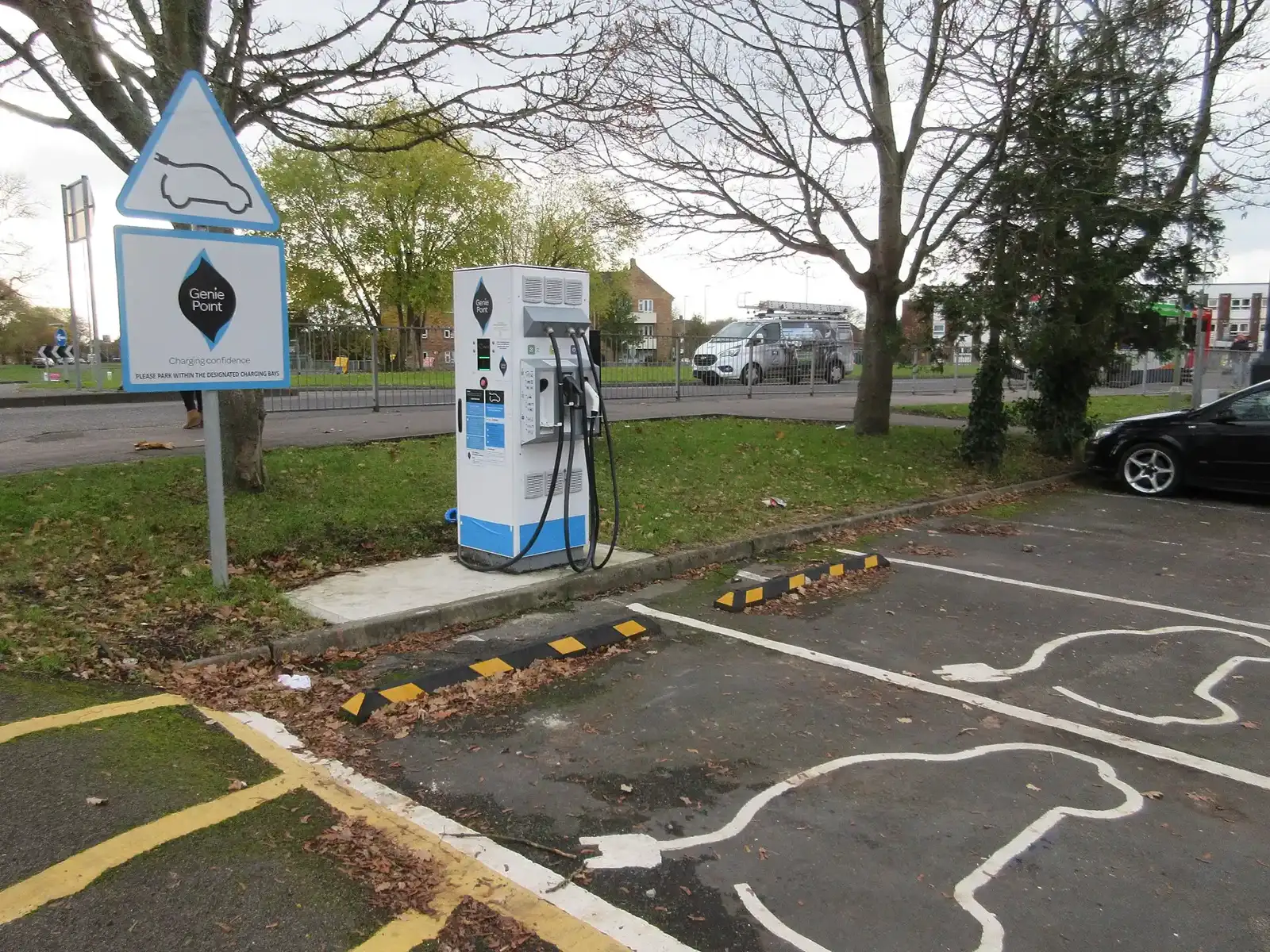
The numbers thrown around in EV charging conversations — 7kW, 50kW, 150kW, 350kW — can seem baffling. Here's what they actually mean in practice.
The kW Explained
kW (kilowatt) is a measure of power — the rate at which energy is transferred. A higher kW means faster charging. Simple as that.
kWh (kilowatt-hour) is what's stored in your battery. A Tesla Model Y Long Range has a ~75kWh battery. A MINI Electric has a ~28kWh battery.
Charging time (roughly): divide your usable battery size by the charger power. A 50kWh battery at 50kW = approximately 1 hour to charge from flat. In practice, charging slows above 80% SoC, so real times are a bit longer.
The Four Tiers of EV Charging
Slow (3–7kW) — overnight and workplace charging
This is your home charger, most hotel chargers, and many public AC charge points. Ideal for overnight top-ups.
- 3kW (3-pin domestic): adds roughly 10 miles per hour
- 7kW (standard home/hotel wallbox): adds roughly 25–30 miles per hour
- Time for a full charge: 8–14 hours depending on battery size
Fast (7–22kW) — public AC charging
Found in car parks, supermarkets, and some newer hotels. Some EVs can accept 11kW or 22kW on 3-phase connections.
- 11kW: adds roughly 45 miles per hour
- 22kW: adds roughly 85 miles per hour
- Time for a full charge: 2.5–6 hours
Rapid (50–150kW) — motorway and en-route charging
The standard DC rapid charger. Found at motorway services and dedicated charging hubs.
- 50kW: adds roughly 150 miles per hour
- 100kW: adds roughly 300 miles per hour
- 150kW: adds roughly 450 miles per hour
- Practical stop time: 20–40 minutes for an 80% charge
Ultra-Rapid (150–350kW) — the fastest available
For cars with 800V architecture (Hyundai IONIQ 5, Kia EV6, Porsche Taycan, some newer models).
- 250kW+: adds 100 miles in around 15 minutes
- Not all cars can accept this power. Check your car's spec.
Ready to plan your next EV trip?
We're working on it. Here's where it stands.
What This Means for Hotel Charging
For overnight hotel stays, you want at least 7kW. Anything slower (3-pin) will only partially charge most EVs in a typical 8-hour stay.
Stays on Sento are labelled charging on-site, charging nearby or standard — confirm charging with the property or a live charging map such as Zapmap before you travel. A Sento Charging Promise is coming soon.
Related Reading
Ready to plan your next EV trip?
We're working on it. Here's where it stands.